Romford has a market right older than Parliament, and it is still being argued about
Most old market towns keep the charter in a frame. Romford keeps using it — and in the 2020s used it to take on the City of London.
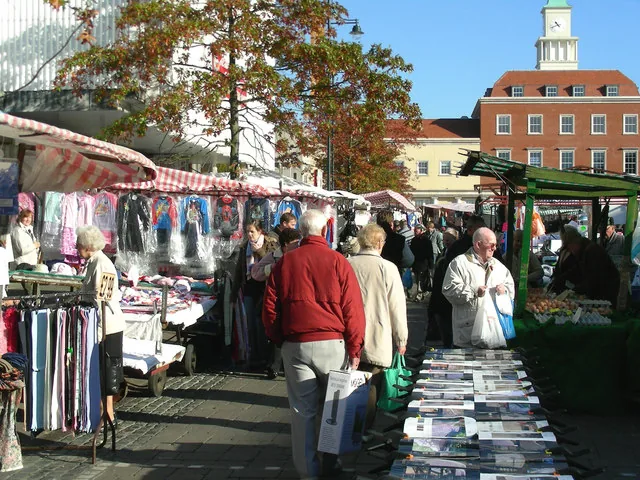
We come to Romford three days a week and the town is a different shape on each of them, so the market is worth understanding rather than working around blindly.
The right, not the charter
The market right at Romford was established by royal order in 1247, in the reign of Henry III, permitting a weekly Wednesday market for the sale of sheep, cattle and other goods. Strictly it was a royal writ rather than a charter, which is a distinction nobody cared about for seven hundred years and then suddenly did.
The market passed into public hands in 1892, when the Romford Local Board bought it. It belongs to Havering Council today, and trades on Wednesday, Friday and Saturday.
Why a medieval right still bites
An ancient market right is not decorative. It carries legal weight over rival markets set up nearby — which is how a 775-year-old instrument ended up entangled with the City of London Corporation’s plans to move its wholesale markets out to Dagenham, a few miles down the road. Havering examined its charter rights and responded formally to the relocation proposals.
Whatever the outcome, the point stands: this is a working legal instrument, not a plaque.
What it means for a coach
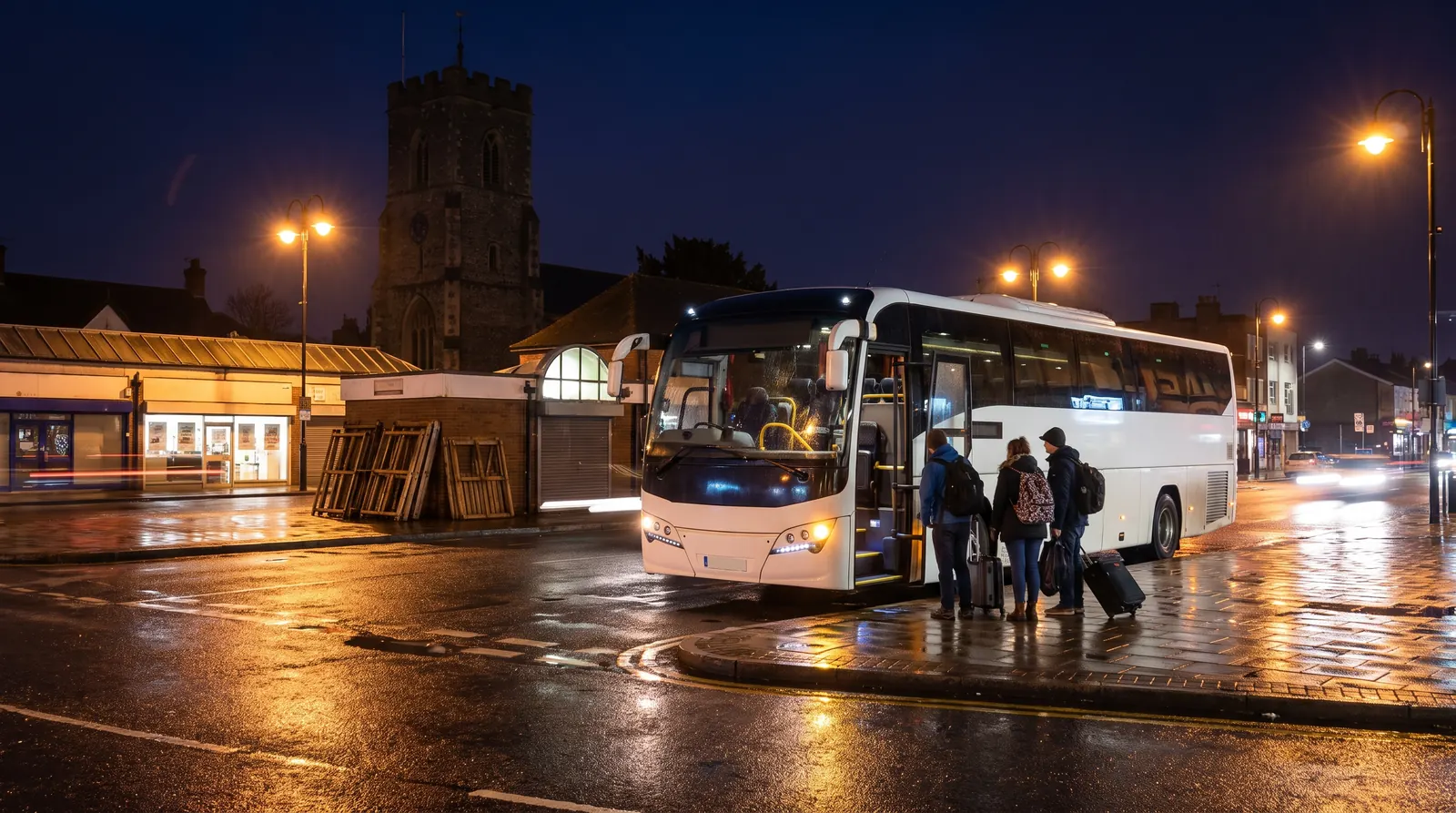
It means the middle of Romford is a very large open market square rather than a road network, and it has been for the better part of eight hundred years. The ring road goes round it because the square was there first. There is nowhere in the centre to leave a twelve-metre vehicle for the same reason there is nowhere to build a car park — the space is spoken for, and has been since Henry III.
So we set down on the edge and walk your group in. It is ninety seconds and it is the difference between a coach that is legally parked and one that is not.
Tell us the day as well as the date, and we will name the stand in the quote. In a town with a market three days a week that is not a detail.